
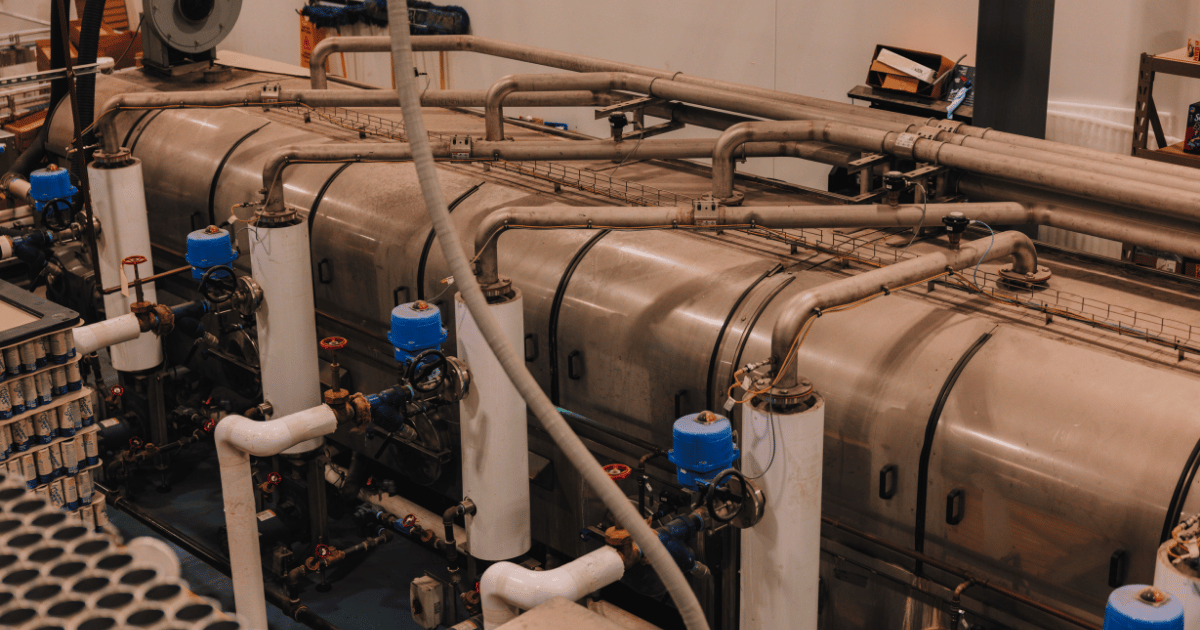
The “Kill Step”: Why Tunnel Pasteurization Is Essential for Beverage Stability
Chuck Zadlo
March 25, 2026
In beverage production—especially for low-alcohol, sweetened, or micro-sensitive drinks—stability is everything. You can brew or blend the perfect liquid, but if it does not survive the journey to the customer, the brand suffers.
Tunnel pasteurization is the solution. It is a reliable, in-package kill step that protects food safety, extends shelf life, and ensures brand consistency. For beverage brands working with a contract manufacturer, it is often the difference between a product that scales and one that risks recalls, returns, or brand damage.
Here is why tunnel pasteurization matters operationally—and how carbonation dictates the rules of the game.
What Tunnel Pasteurization Is (In Plain English)
Tunnel pasteurization is a thermal treatment applied after the beverage is sealed in its final package (can, bottle, or other container). The process is simple but precise:
- Heat: The sealed package is gradually heated in a controlled tunnel to a specific target temperature.
- Hold: It remains at temperature long enough to accumulate Pasteurization Units (PU). This thermal exposure inactivates spoilage organisms (yeast and bacteria) and pathogens.
- Cool: The package is cooled back down to stop the cooking process and stabilize the product.
This in-package approach makes tunnel pasteurization one of the most dependable methods for achieving microbial stability in beverages.
Why Tunnel Pasteurization Matters Operationally
For production teams and beverage brands, tunnel pasteurization solves several critical problems:
- Microbial Stability: It stops biology in its tracks. By hitting the right PU target, you eliminate the risk of refermentation (exploding cans), souring, off-flavors, and sediment buildup.
- The "Post-Fill" Safety Net: Unlike flash pasteurization, this treats the product after it is sealed. You aren't relying entirely on a sterile downstream filling environment. It covers any minor contamination that might happen during filling.
- The Clean Label Advantage: While chemical preservatives (like potassium sorbate or sodium benzoate) are highly effective at stopping spoilage, many modern brands prefer to avoid them. Tunnel pasteurization substitutes thermal energy for chemical additives. This allows you to maintain shelf stability while offering the "clean label" (preservative-free) product that many consumers now demand.
- Market Expectations: "Pasteurized" is often a requirement for major retailers and distributors. Having this capability meets those strict safety standards and opens doors to new contracts.
The Carbonation Factor: Gold Standard vs. Physics
Tunnel pasteurization is not one-size-fits-all. The difficulty level depends entirely on your bubbles.
The Gold Standard
For teas, juices, and still/lower carbonation drinks, tunnel pasteurization is the gold standard. Because these packages are under low internal pressure, you can safely heat them to ensure maximum microbial kill without worrying about the package failing. It is the safest way to guarantee shelf life.
The Challenge with High Carbonation Levels
High-carbonation products (like sparkling waters or craft beers) present a physics problem. Heat expands CO2, creating a massive spike in internal pressure.
- The Risk: If the temperature ramps too fast or the fill height leaves too little headspace, the pressure will exceed the can's rating. This leads to bulged ends, peaked bottoms, or bursts.
- The Fix: Running high-carb products requires strict tuning of temperature ramps and often forces a compromise between line speed and package integrity.
# The Trade-offs
Ultimately, tunnel pasteurization is a balancing act.
- Flavor: Too much heat (excessive PUs) can "cook" the product, causing oxidation flavors.
- Pressure: Too much heat on a carbonated can causes deformation.
The goal is to hit the minimum PU required for stability without crossing the line into sensory damage or package failure. It is an insurance policy for your liquid—ensuring it tastes the way the brewer intended, whether it is opened in two weeks or six months.
Why This Matters When Choosing a Contract Manufacturer
For beverage brands seeking a contract manufacturer, tunnel pasteurization capability signals operational maturity. It means:
- Proven food safety controls
- Longer, more predictable shelf life
- Support for clean-label formulations
- Readiness for major retail and distribution requirements
In short, tunnel pasteurization is not just a processing step. It is a strategic tool for scaling beverages safely, consistently, and profitably.